FISP Inspection Support in NYC
Your QEWI runs the critical examination. We give the exam what it needs: scaffold drops and rigging at each close-up location, cavity wall probes opened and rebuilt, and a crew ready to make a hazard safe the day it’s found.
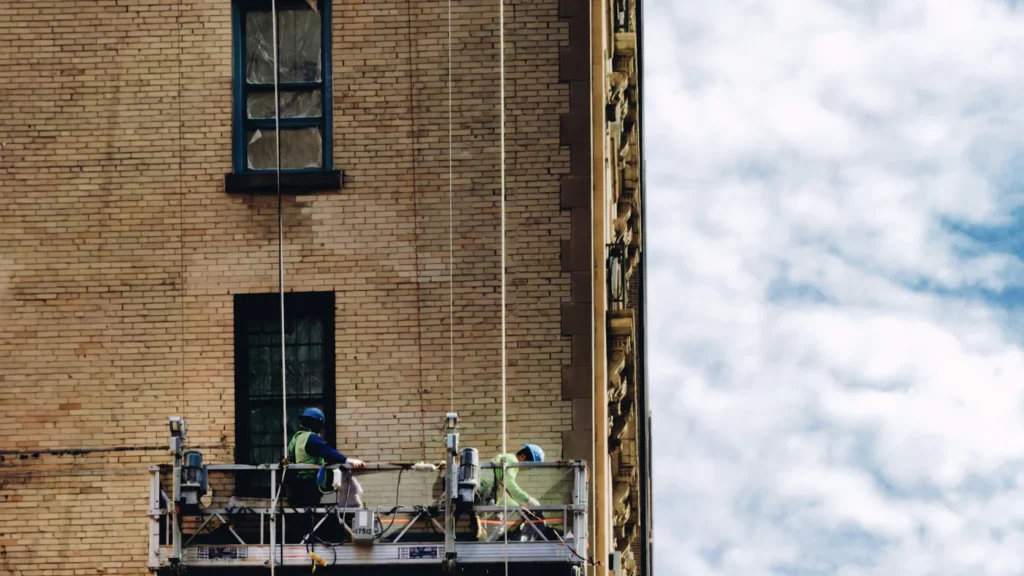
What Happens During a FISP Inspection?
A FISP inspection, called the critical examination in DOB’s rules, is the Local Law 11 check of every exterior wall on a building taller than six stories. It’s run by a Qualified Exterior Wall Inspector (QEWI), a New York State licensed architect or engineer with at least seven years of experience on facades that tall. The QEWI starts by reviewing the last report, then examines the walls, balconies, railings, parapets and attachments.
Binoculars from the sidewalk aren’t enough. DOB’s facade rule requires hands-on checks at least every 60 feet along walls facing the street, ideally from a scaffold or other platform, and drones can support the exam but can’t replace those checks. The report is due at DOB within 60 days after the exam is finished. If the QEWI finds an Unsafe condition, DOB and the owner must be told right away.
What Your QEWI Will Ask You For
- Copies of the last FISP report and any amended reports
- Roof access, keys, and a super or manager on call during exam days
- Building drawings and past probe locations, if you have them
- Written notice to tenants whose windows, terraces or fire escapes are used for access
- Permission from neighbors whose roofs the rigging has to cross
How Our Crew Supports the Critical Examination
- Access planning
We walk the building with your QEWI, mark each close-up location, and choose the right rig for it.
- Scaffold drops and rigging
We set up and move swing stages, pipe scaffold or a lift so the inspector can reach the wall at every location.
- Cavity wall probes
We open the wall where the QEWI marks it, keep it open for the review, then rebuild it with matching brick and mortar.
- On-the-spot securing
Loose railings, AC brackets or flower boxes found during the exam can be fastened while the rig is still in place.
- Same-day make-safe
If the exam turns up a hazard, we remove loose material and set up protection the same day.
- Records for the report
We keep dated photos of probes and any work done, plus the permit and job numbers your QEWI needs.
Where FISP Inspections Go Wrong
Booking the Inspector Late
Exams need scheduling, rigging and weather days. Start late in your filing window and the 60-day report clock can push the filing past the deadline.
Counting on a Drone Survey
Drone photos help the inspector plan, but DOB still requires hands-on checks along the street walls. A drone-only exam won't hold up.
Closing Probes With the Wrong Brick
A probe left open, or patched with mismatched brick and mortar, can show up as a defect in the next report. Rebuild it the way the wall was built.
No Plan for an Unsafe Finding
If the QEWI finds a hazard, protection has to go up fast. Line up a crew and a shed or netting plan before the exam starts. See Unsafe facade repair.
What the Inspector Looks At
The exam covers far more than brick. Every critical examination works through these six parts of the building.
Masonry and Mortar Joints
Cracks, bulges, spalled brick and open joints on every elevation.
Steel Lintels and Window Openings
Rust staining, displaced brick above openings, and failed sealant at frames.
Parapets and Copings
Leaning or cracked parapets, loose coping stones and missing anchors at the roofline. These are also checked every year under the parapet rule.
Balconies, Railings and Fire Escapes
Rails and guards must be positively secured with welds, bolts or screws. Any part that can move is rated Unsafe.
Cornices and Decorative Trim
Terra cotta, stone and sheet metal elements that crack, shift or come loose with age.
Attachments
Window AC units, signs, flagpoles, satellite dishes, antennas and flower boxes.
Owner, Inspector, Contractor: Who Does What
Swipe sideways to see every column.
| Task | Owner | Inspector (QEWI) | Our Team |
|---|---|---|---|
| Scheduling | Hires the QEWI and books exam dates inside the filing window | Sets the exam plan and close-up locations | Builds the rigging schedule around those dates |
| Access | Arranges roof, apartment and neighbor access | Picks where each drop or lift goes | Supplies, installs and moves the rig, with the permits it needs |
| Examination | Approves probes and on-the-spot fixes | Does the hands-on checks and directs each probe | Opens and rebuilds probes and secures loose items |
| Reporting | Reviews findings and plans repairs | Files the report with DOB within 60 days | Hands over photos and records of work done during the exam |
Exam date set but no access plan? Send your last report and we’ll map the drops and rigging.
What Affects the Cost of Inspection Access
The QEWI bills separately for the exam. Our part, the access and wall work, is priced after a site visit and comes down to these five things.
- Street frontage
Every 60 feet of wall facing the street adds another close-up location.
- Height and roof setup
Davits, tiebacks and parapet strength decide how the rigging is hung.
- Number of probes
Cavity walls need probes at least every other cycle, one at each close-up location.
- Permits and sidewalk protection
Scaffold and rigging permits, plus netting or a shed where needed.
- Exam days and rig moves
Every move to a new drop adds crew time.
Next Stage: FISP Repairs
Once the report is filed, every SWARMP and Unsafe item needs a fix and a timeline. See how repairs are planned around your report’s deadlines.
FISP Inspection Questions From Building Owners
How long does a FISP inspection take?
It depends on the building's size and how many close-up locations it needs. Field work on a typical apartment building runs from a few days to a few weeks, plus weather days. After the exam is finished, the QEWI has 60 days to file the report.
What qualifications does a QEWI need?
A QEWI is a New York State licensed architect or professional engineer with at least seven years of relevant experience on facades over six stories. Others can help with the exam, but only under the QEWI's direct supervision.
Can a drone replace the hands-on inspection?
No. DOB allows drones to support the exam, but they don't replace the close-up checks. Those still have to happen at intervals of no more than 60 feet, usually from a swing stage, lift or fire escape.
What is a probe, and will it damage the wall?
A probe is a small opening in a cavity wall that lets the inspector see the wall ties and the space behind the brick. Cavity walls must be probed at least every other cycle, with one probe at each close-up location. The opening is rebuilt afterward with matching brick and mortar.
Do tenants need to leave during the exam?
No. The inspector may need to pass through some apartments, terraces or fire escapes, and rigging may hang outside windows for a day or two. Send tenants the dates in advance so access goes smoothly.
Can the exam happen long before the filing date?
Only within limits. A report can't be filed more than one year after the close-up inspection, and it's due within 60 days of the exam's completion. Most owners time the exam so the filing lands well inside their window.
Who pays for the scaffold during the inspection?
The owner does. Access is usually priced separately from the QEWI's fee, so ask both for their scope up front and agree on the close-up locations before rigging is priced.
Get Access Ready for Your FISP Exam
Send your last report and your exam dates, and we’ll plan the rigging, probes and crew around your inspector’s schedule.